
Two faults that settle it
Water coming through the tank itself. Once the steel tank corrodes through, there is no repair. Water from a fitting, the drain valve or the relief-valve pipe is different and is often fixable, so find the first wet spot before deciding.
A heater that has been in floodwater. Metro Codes' guidance on water-damaged heaters says a gas or electric unit exposed to floodwater should be replaced. Controls and thermostats corrode, the insulation around the tank is nearly impossible to clean, and the relief valve can stick. Metro also advises having a licensed plumbing or mechanical contractor inspect the equipment before anything is restarted.
Faults that are usually worth repairing
On a tank that is dry and not badly rusted, these are normally parts jobs:
- a burned-out heating element or failed thermostat on an electric heater
- a pilot, thermocouple, igniter or gas control on a gas heater
- a leaking drain valve or a relief valve that drips
- a broken dip tube, which shows up as lukewarm water that runs out fast
Where condition tips the balance
There is no single age at which every heater should go. The signs that point toward replacement are rust at the base or around the pipe connections, repeat repairs within a short time, and heavy sediment that keeps rumbling after a flush. Metro Water's supply is moderately hard, so scale is part of normal wear here. Check the label for the manufacture date and the manufacturer's tank warranty, because a failure inside the warranty period can change the math.
A straight swap or an upgrade
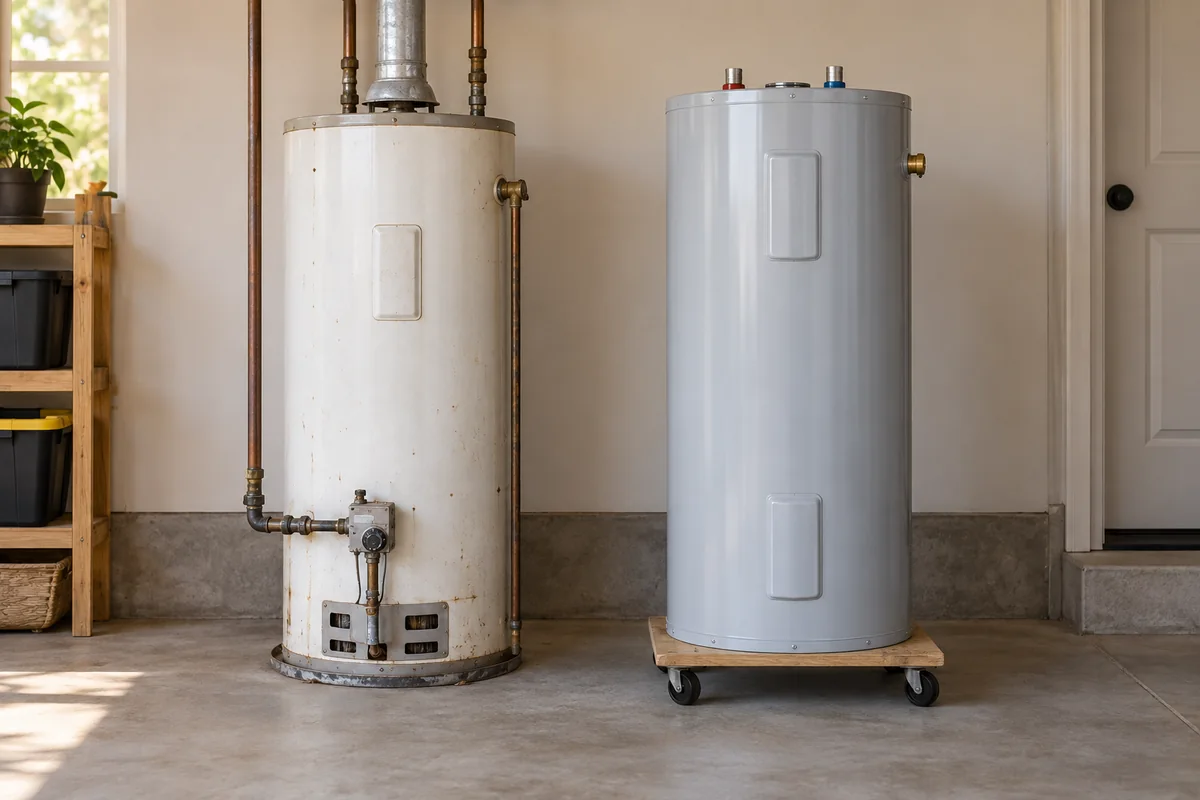
A like-for-like replacement is the simplest job. Metro Codes says replacing a residential 50-gallon water heater generally does not need a permit. Changing fuel type, for example gas to electric, does need one, and it often brings a new electrical circuit or a gas line change with it. A tankless heater is a bigger change again: it needs a gas supply and venting sized for the unit, or a large electrical supply, plus regular descaling.
Before you approve either option
Ask for both options in writing. For a repair, get the part, the reason it failed and anything else that looks worn. For a replacement, get the capacity, fuel, haul-away, connectors and any permit. Our plumbing cost guide shows dated national planning ranges for a replacement. When you are ready to book, the water heater repair page lists what to tell your plumber.