
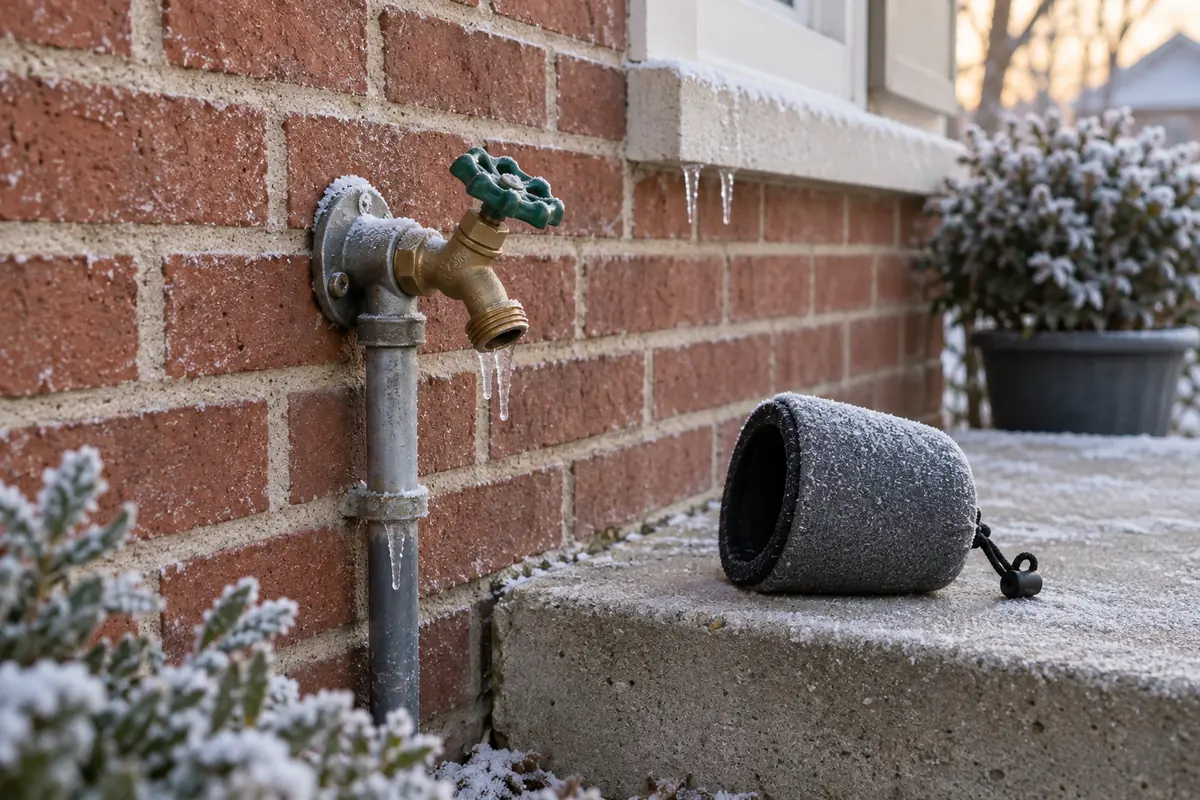
Find the lines exposed to cold
Nashville does not need a northern winter for a hard freeze to cause plumbing trouble. Metro Water Services identifies outdoor hose bibs, sprinkler lines, crawl spaces, garages, attics, kitchen cabinets, and pipes against exterior walls as places to check. Those are common exposure patterns, not a diagnosis of any one house. Walk through the property before a cold spell and ask where the main water shutoff is. If you rent, use the property manager's winter instructions. Your technician can tell you whether a line needs insulation, relocation or another repair after seeing its actual position.
Protect the simple openings first
Cover outdoor spigots according to the manufacturer's directions, close crawl-space vents when appropriate, and keep garage doors shut when supply lines run through the garage. Metro Water Services also advises opening kitchen and bathroom cabinet doors to let warm air reach pipes during extreme cold; move hazardous cleaners out of children's reach first. Insulation can reduce exposure, but it cannot make a line invulnerable. Check the utility's current winter guidance before following an old neighborhood tip or assuming every home's layout is the same.
A trickle is a clue, not proof of a break
If a faucet suddenly produces only a trickle during freezing weather, a frozen section is possible. Other faults can also reduce flow. Metro's advice says to keep that faucet open while safely warming an accessible frozen section so water can move as ice melts. Do not use a blowtorch, propane heater, charcoal stove or other open flame. Keep electric equipment away from standing water and flammable material. If you cannot locate the frozen area or the pipe is inaccessible, stop and call so your plumber can look at it. Do not cut into a wall based on a web diagnosis.
When a pipe bursts, limit the damage safely
If water is spraying or spreading, shut off the appropriate valve if you know where it is and can reach it without entering water near electricity. Move people away from wet outlets, panels or appliances. Call with the exact address, affected rooms and shutoff status, and note where the water appears and when the leak began. A burst can be on the supply line even if the wet ceiling or floor is some distance away. Your technician goes over what to inspect first, and you'll hear the visit timing on the call.
Check again after the thaw
Water flow returning does not prove the pipe survived. Watch for new damp spots, dripping fittings, changes in water pressure or a meter that moves when fixtures are off. Do not restore an unfamiliar valve abruptly if you suspect a split line. Your technician can inspect exposed piping and decide whether a repair is needed. Keep photos and notes if damage occurred, but the insurer decides any claim under the actual policy; no website can promise payment for a frozen-pipe loss. Compare the signs with the leak-detection guide if the source remains unclear.
Put the address before the neighborhood name
East Nashville, Antioch, Hermitage, Bellevue and Madison homes can differ in age, crawl-space access, pipe routing and water utility. A neighborhood label does not prove which pipe froze, who owns the line or which utility serves the address. If the problem appears near the meter or in the street, check the actual water utility on the bill. Where Metro Water Services serves a property, its public main-to-meter line and private meter-to-building line have different responsibility. If an interior pipe is wet, describe it to your technician instead of assuming the utility will handle it. The exact address and visible symptom are the useful starting points.